Mobile Concrete Crushing — On-Site Aggregate Production
We bring the crusher to your site and turn concrete and asphalt rubble into reusable base rock, drain rock, and structural fill — eliminating haul-off costs.
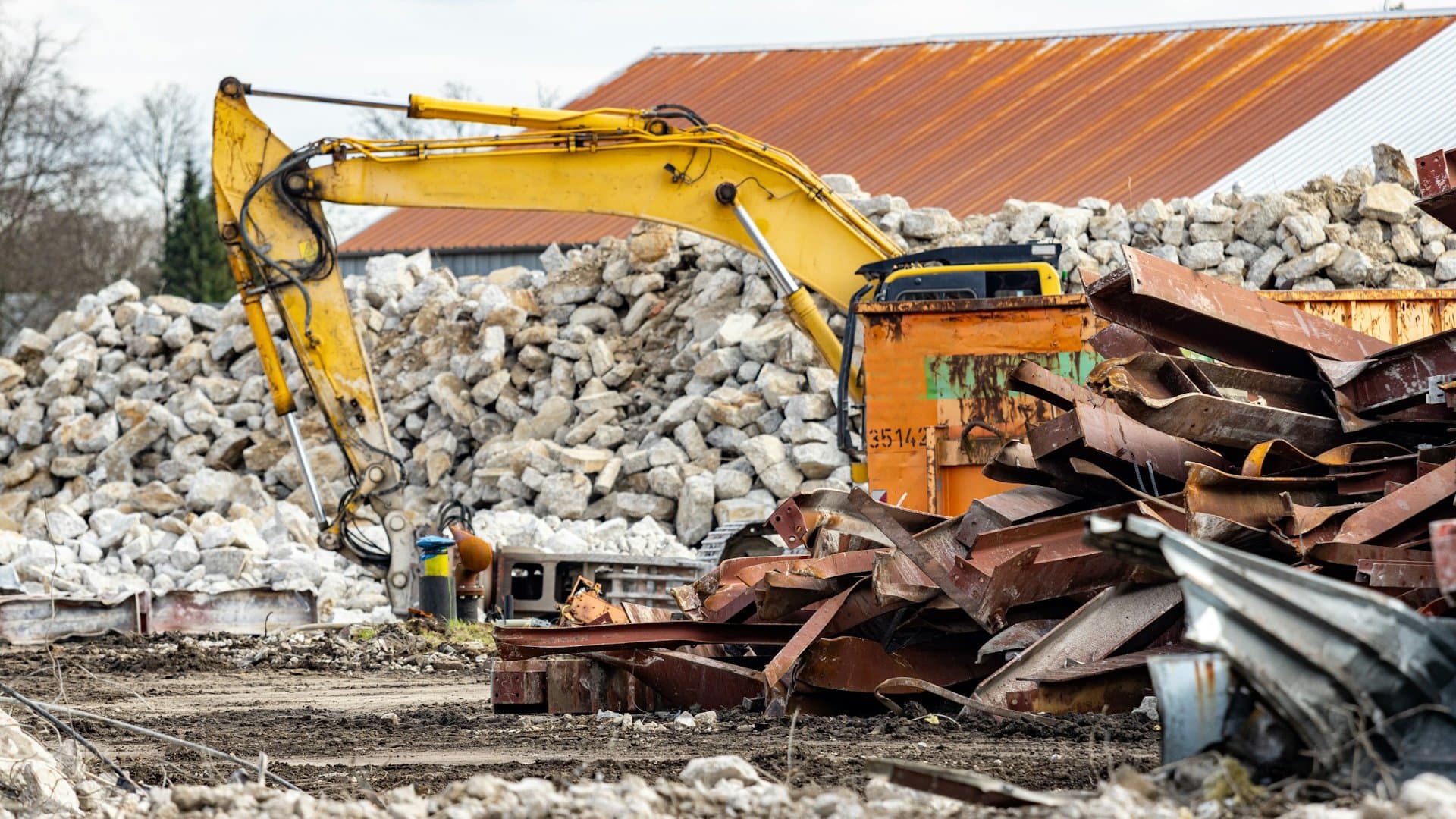
Hauling concrete and asphalt demolition debris to a landfill is expensive, time-consuming, and wasteful. Walberg, Inc. provides mobile concrete crushing services that bring the crusher directly to your job site, processing rubble into reusable aggregate on the spot. This service eliminates haul-off costs, reduces disposal fees, and produces valuable construction materials — base rock, drain rock, and structural fill — that can often be used on the same project where the demolition occurred.
Our mobile crushing operation processes concrete, reinforced concrete, and asphalt rubble into specified aggregate sizes on site. The crusher can produce materials ranging from fine base material to larger drain rock sizes, depending on your project needs. Rebar and other metals are separated by the crusher's magnetic system and can be recycled as scrap. The result is a pile of clean, usable aggregate sitting right where you need it, ready to be placed as base material for roads, parking lots, building pads, or drainage systems.
The economics of mobile crushing are compelling for projects with significant concrete or asphalt demolition. Consider a typical commercial demolition that generates 500 cubic yards of concrete rubble. Without crushing, that material requires trucking to a disposal site at $30 to $50 per load, plus disposal fees. With mobile crushing, the same material is converted into aggregate that has real value — potentially $10 to $20 per cubic yard for base rock or fill material. Instead of paying for disposal, you are producing material that offsets your aggregate purchase costs. For large projects, the savings can be substantial.
Walberg, Inc. has been providing mobile crushing services across Tehama, Butte, Shasta, Glenn, Colusa, and surrounding areas since expanding this capability as part of our commitment to sustainable construction practices. We also process material at our Walberg Rock facility at 23050 Sonoma Ave in Corning for projects where on-site crushing is not practical. Whether you have a demolition project generating concrete rubble, a site with old pavement that needs to be removed and recycled, or stockpiled material from previous projects, our mobile crusher can turn that waste into a valuable resource. This service aligns with our broader commitment to recycling and reuse — keeping construction materials out of landfills while reducing project costs for our customers.
What's Included
- Mobile crusher mobilization to your job site
- Crushing of concrete, reinforced concrete, and asphalt
- Production of specified aggregate sizes (base rock, drain rock, fill)
- Magnetic separation of rebar and metals for scrap recycling
- Stockpiling of finished aggregate on site
- Material can be processed at our Walberg Rock if preferred
- Aggregate quality suitable for base, fill, and drainage applications
- Significant reduction in haul-off and disposal costs
- Environmentally responsible alternative to landfill disposal
- Available for demolition projects, site clearing, and stockpiled material
OUR PROCESS
How we deliver mobile concrete crushing.
Material Assessment & Crushing Plan
We evaluate the volume and type of concrete and asphalt material to be crushed, determine the desired finished aggregate size, assess site access for the crusher, and provide a cost comparison versus traditional haul-off and disposal.
Crusher Mobilization & Setup
We transport the mobile crusher to your job site, position it in the designated processing area, and set up the screening and magnetic separation systems. Material is staged for efficient feeding of the crusher.
Crushing & Aggregate Production
The crusher processes concrete and asphalt rubble into the specified aggregate size. Rebar and metals are magnetically separated for scrap recycling. Finished aggregate is stockpiled on site in designated locations for use on the project or for later pickup.
Site Cleanup & Demobilization
After all material has been processed, we clean up the crushing area, remove any remaining debris, and demobilize the crusher from your site. The finished aggregate stockpile is ready for use on your project or for sale and distribution.
EQUIPMENT
Equipment used on this service.
AREAS SERVED
Available across Northern California.
RELATED SERVICES
Other services you might need.
FAQ
Frequently Asked Questions
Our mobile crusher can produce aggregate in a range of sizes from fine base material (3/4-inch minus) to larger drain rock sizes (2 to 4 inches). The specific size is adjustable based on your project needs. Most commonly, we produce Class II aggregate base equivalent material and drain rock for construction applications.
Mobile crushing costs depend on the volume of material, site access, and mobilization distance. When compared to the combined cost of loading, hauling, and disposing of concrete rubble, mobile crushing frequently saves 30% to 50% or more. We provide a cost comparison with your estimate so you can see the savings for your specific project.
Recycled concrete aggregate performs well for many construction applications including base course, fill, and drainage. It is widely accepted by Caltrans and local agencies for use in road base, parking lot subgrade, and structural fill. For specific applications, we can discuss whether recycled aggregate meets the project specifications.
Generally, mobile crushing becomes cost-effective for projects with 200 cubic yards or more of concrete or asphalt rubble. For smaller quantities, it may be more economical to haul the material to our Walberg Rock in Corning for processing. We will help you determine the best approach based on your material volume and site conditions.
Yes, our mobile crusher processes both concrete and asphalt rubble. Asphalt millings and chunks are crushed and screened into reusable aggregate that works well for base material, temporary roads, and fill. We can process concrete and asphalt separately or together depending on your end-use requirements.