Pond Cleaning & Reservoir Dredging Services
Excavation-based pond and reservoir cleanout, sediment removal, and dredging for agricultural, municipal, and private water storage facilities across Northern California.
Ponds, reservoirs, and water storage basins accumulate sediment over time, gradually reducing their water storage capacity and operational effectiveness. Walberg, Inc. provides excavation-based pond cleaning and dredging services that restore these facilities to their original capacity, serving agricultural operations, municipal water districts, and private property owners throughout Tehama, Butte, Shasta, Glenn, Colusa, and surrounding areas. With our fleet of heavy equipment and 26 years of experience in earthwork, we deliver efficient pond cleanout services that minimize disruption and maximize the usable life of your water storage facilities.
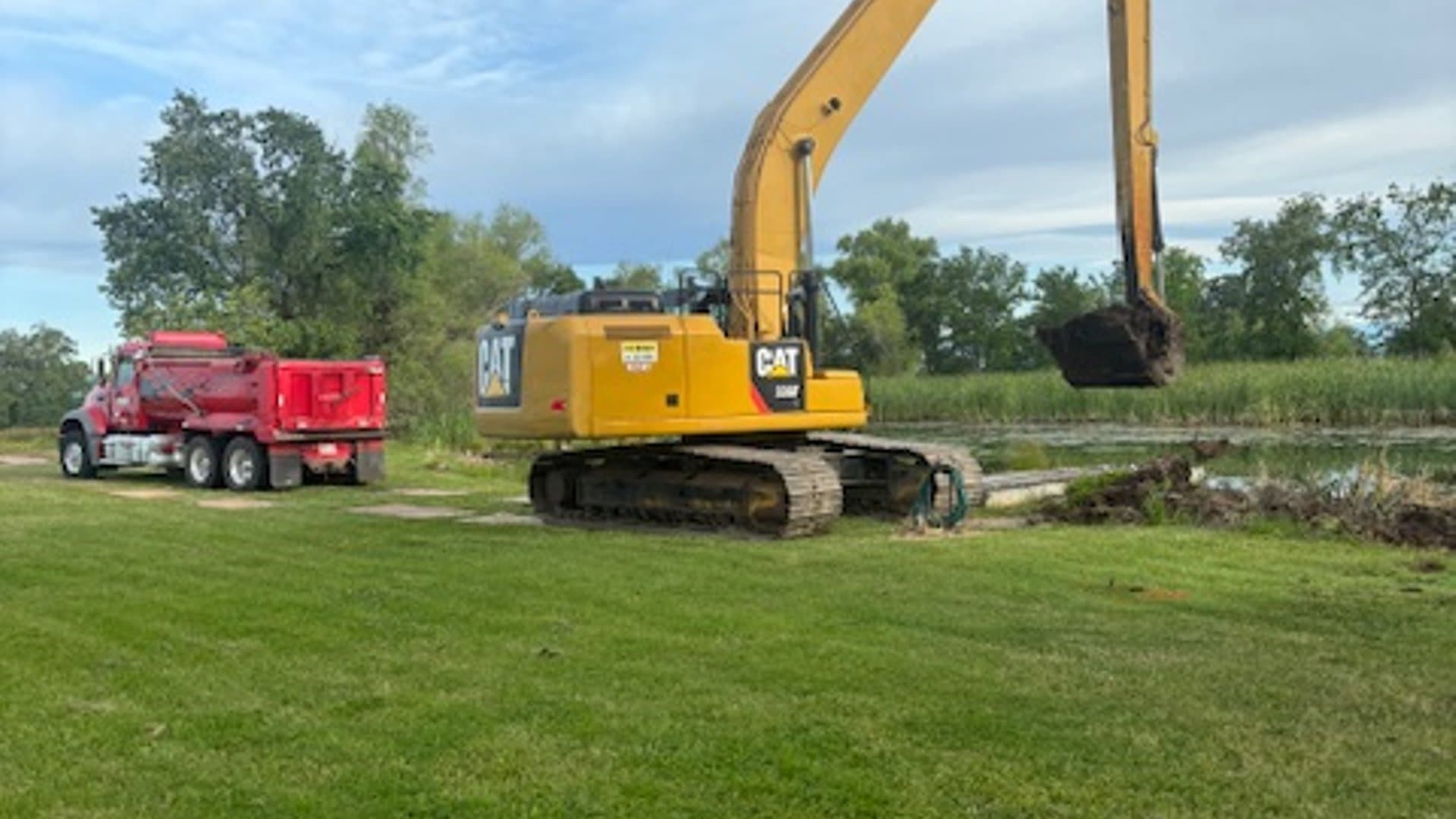
Our approach to pond cleaning uses conventional excavation equipment — excavators, dump trucks, and loaders — rather than specialized dredging barges. For ponds and reservoirs that can be drawn down or are seasonally dry, this approach is typically faster, more cost-effective, and produces a cleaner result than hydraulic dredging. Our excavators work from the pond banks or from within the drawn-down basin to remove accumulated sediment, silt, and debris. The material is loaded into trucks and hauled to a designated disposal area or, if the sediment is clean, spread on adjacent agricultural land where it often serves as a beneficial soil amendment.
Recent pond cleaning projects include the Corning Water District Pond Cleaning, where we removed years of accumulated sediment to restore the water storage capacity critical to the district's operations, and the Andersen Ranch Retention Pond, which required precise re-grading to restore the designed storage volume and outlet function. These projects demonstrate our ability to work with both municipal agencies and private landowners on water infrastructure maintenance.
Pond cleaning timing is important. Most pond and reservoir cleanout work in the Northern Sacramento Valley is performed during the dry season when water levels are lowest and the basin can be accessed with equipment. We recommend planning your pond cleaning project during the summer and early fall months to take advantage of dry conditions. Walberg, Inc. can assess your pond's condition, estimate the sediment volume, and develop a cleanout plan that restores your water storage capacity efficiently. As a licensed general engineering contractor (CSLB #898860) with over 100 pieces of company-owned heavy equipment and a crew of 38 to 40 experienced operators, we have the resources to handle pond cleaning projects of any size. Contact us at (530) 824-0773 to schedule a site visit and estimate.
What's Included
- Sediment and silt removal from ponds and reservoirs
- Excavation-based pond dredging
- Pond bank and slope re-grading
- Sediment hauling and disposal
- Beneficial reuse of clean sediment on agricultural land
- Inlet and outlet structure cleaning and repair access
- Pond bottom re-grading to restore designed contours
- Vegetation and debris removal from water features
- Erosion control and bank stabilization
- Capacity restoration for water storage facilities
OUR PROCESS
How we deliver pond cleaning.
Site Assessment & Volume Estimation
We visit your pond or reservoir to assess conditions, estimate sediment volume, evaluate equipment access, and determine the best timing for cleanout. We identify sediment disposal options and any environmental considerations specific to your site.
Drawdown Coordination & Access Planning
We coordinate the pond drawdown schedule with your operations, plan equipment access routes that minimize damage to surrounding areas, arrange sediment disposal or spreading locations, and develop a work plan that fits your operational requirements.
Sediment Removal & Hauling
Once the pond is drawn down, our excavators remove accumulated sediment working from the banks inward. Material is loaded into trucks and hauled to the designated disposal or spreading area. We work systematically to remove all sediment while maintaining stable bank slopes.
Re-Grading & Site Restoration
After sediment removal is complete, we re-grade the pond bottom to restore designed contours and capacity, repair any bank erosion, clean around inlet and outlet structures, and restore the access routes used during the project. The pond is ready to refill and return to service.
EQUIPMENT
Equipment used on this service.
AREAS SERVED
Available across Northern California.
RELATED SERVICES
Other services you might need.
FAQ
Frequently Asked Questions
Cleaning frequency depends on the watershed characteristics, inflow sediment load, and the pond's purpose. Agricultural irrigation ponds in the Northern Sacramento Valley typically benefit from cleanout every 10 to 20 years, though ponds receiving runoff from disturbed or agricultural land may need more frequent attention. We can assess your pond and recommend an appropriate maintenance schedule.
The best time for pond cleaning in our area is during the dry season, typically June through October, when water levels are lowest and the basin can be accessed with heavy equipment. Planning your project for late summer gives the longest window of dry conditions for efficient work and allows the pond to refill with winter and spring rains.
Pond cleaning costs depend on the volume of sediment to be removed, equipment access conditions, haul distance to the disposal area, and any environmental requirements. Small farm ponds might cost $5,000 to $15,000, while larger municipal reservoirs can run $50,000 or more. We provide detailed estimates after a site visit and assessment.
Clean sediment from agricultural and irrigation ponds is often spread on adjacent agricultural land where it serves as a beneficial soil amendment. Sediment from urban or industrial ponds may need to be tested and hauled to an appropriate disposal facility. We evaluate disposal options during our initial assessment and include disposal costs in our estimate.
For most excavation-based pond cleaning, we need the water level drawn down to allow equipment access to the basin floor. Some work can be performed with a long-reach excavator from the bank in shallow water, but for thorough sediment removal and re-grading, a drawn-down or dry basin produces the best results and most efficient operation.
Permit requirements depend on the pond's location and regulatory status. Ponds connected to natural waterways may require permits from the Army Corps of Engineers, Regional Water Quality Control Board, or California Department of Fish and Wildlife. Private irrigation ponds and retention basins typically have fewer regulatory requirements. We can help you identify any permits needed for your specific project.